
Lessons on Living with less
How I stopped searching for my keys!

You can listen to me reading this below.
Rumour has it (or I suppose these days we can say - according to the internet) that people spend up to 110 days over their lifetime looking for lost items - about 72 hours (or 3 days) per year! I remember first reading a similar statistic in one of the most memorable books I have read - The Happiness Project. The author of that book Gretchen Rubin also had a number of rules for life - one of them being - if you can’t find something - clean up!
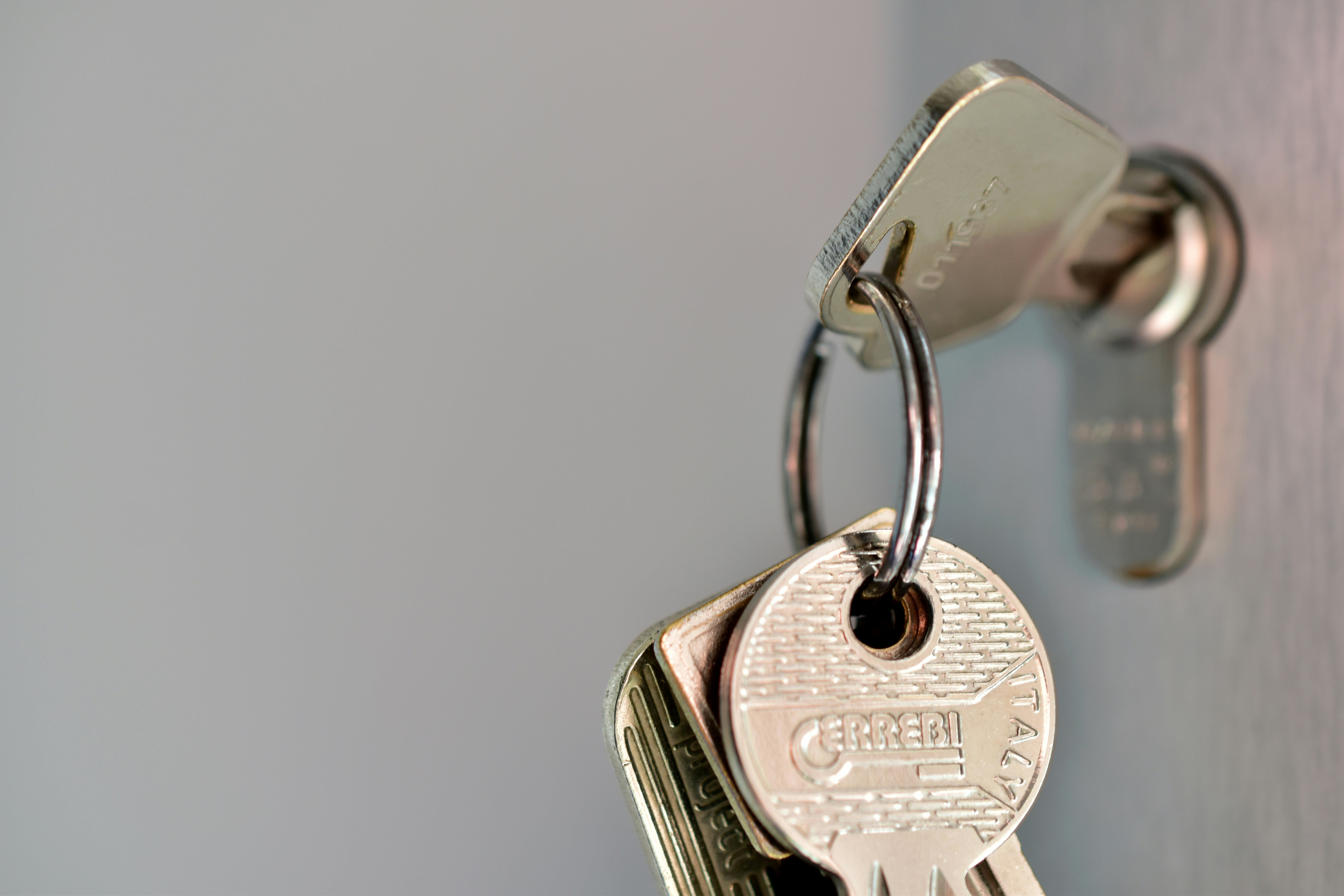
I am one of those people who used to spend way more than 72 hours per year looking for stuff. Sometimes it felt like 72 hours per week - as I was constantly searching for things! Sometimes it was an obscure piece of paper, or some type of receipt, other times it was items I needed often - for example I went through a phase in my life where I would search for my keys EVERY DAY. Once - years ago, when I lived in a place where I needed the key to get out of the house, I ended up not leaving home one Sunday morning because I couldn’t find it. Eventually I lay on my bed, and heard it jingling - and it turns out it had fallen from somewhere on my person into my duvet cover when I was making the bed.
I tried all types of systems to make this better. I put up a hook by my door for keys. I bought a filing cabinet. I re-arranged and decluttered and watched videos about digital systems for years, but I still felt as if I spent too long looking for stuff - and then by the time I found it, the place looked as if a tornado had gone through it.
This often felt like the opposite of “if you can’t find something tidy up” because it was often when my apartment looked it’s cleanest that I had no idea where anything was, or I knew it would be at the bottom of a neatly packed box - and I would sometimes consider buying something new instead of pulling apart boxes, drawers and cupboards to find what I was looking for, and then have to clean up - again.
When I moved to the UK a few years ago, and I got rid of almost all of my possessions, my sister and I had also become obsessed with ideas about living with less (not quite minimalism, but not far off!) We had sooooooo many conversations about it (you can listen to one here - as we discussed her love for her journals and how having kids made her think about living with less).
One of the hardest parts I found when it comes to living with less is the living part. When I think about the things that made life feel joyful, I didn’t necessarily want to reduce my craft supplies for my crochet or cross stitch, or the music for choir. I also needed to figure out how I could still enjoy baking with a very pared down kitchen (you can read more about that here). In addition, being self-employed meant there was always some level of paperwork I would have to keep for several years. And my sister wanted to be able to indulge her love for books. So we began to discuss how we could define our version of living with less, and I wanted a lens that I could use on my decisions when I was considering not just possessions but also as I was changing my own relationship with money and spending as a whole.
When I started my journey, one of the things I had to consider was - what was important to me. Everything I read said that you needed to choose what mattered most - and that needed to be one thing that mattered most in each space. Here is where I came across my first problem. There were three things that mattered most to me, and try as I might, I couldn’t separate them out into one being more important than the other.
I wanted things to be very accessible - and I didn’t want to have to pull apart a whole cupboard in order to reach something. This also fit in with something that is true about me - if something is out of sight it is out of mind. This means that things need to be accessible and visually accessible. It means I can’t stack anything 3 deep, or pile it up so that I can’t see what it is. And all of that would be fine if it isn’t for the third thing - which is that I don’t like visual clutter.
So when I came up with the words I wanted to describe my space, it was spacious, accessible and visible (when needed). I sat with these three ideas for a long time, trying to arrange my new space in such a way that I could achieve all three things, but I still struggled - re-arranging things constantly and never feeling quite content. I needed another anchor, and so I kept returning to questions around how I wanted to use my space, how I wanted things arranged, and what mattered to me.
The 10 minute rule.
Eventually it came to me - as I realised I was still spending too much time in the morning looking for my keys, or headphones (which were often inevitably in the pocket of whatever outfit I wore the day before) and I decided that I also wanted to change what felt like a lifelong habit of looking for things.
And so I came up with the simple one rule for my own living-with-less journey - I couldn’t spend more than 10 minutes looking for anything.
If I did - that was an immediate signal that something needed to change. It perhaps meant that I was accumulating too much stuff - as I realised after my first major reduction of possessions that decluttering isn’t a one and done, instead it is something I needed to keep revisiting to take stock of what I had, and to keep on top of anything I needed to give away or get rid of.
Or it meant that my system was no longer working - because perhaps the way I was using it had changed as my own patterns and life changed. One example of when this happened - I started an early morning workout class a few months ago, and it upended my whole life, and I needed a new system that meant I could easily find my workout items AND also have a quick turnaround after the workout to get back out the door to work. This was a reminder to me that as things in my life change, my system could change with it, and the 10 minute rule anchored it all!
Having a 10 minute rule has been one of the most helpful parts of my living-with-less journey, and has almost become a guiding principle whenever I have made changes to my space, or set up my system. Knowing that I want to be able to find and access anything in less than 10 minutes influenced my choices when it comes to storage and to systems. It influenced the questions I asked myself.
It influenced what I kept and what I discarded. And it gave me a good framework as I tried to balance the other guiding principles I had when it comes to the space I want to live in - accessibility, spaciousness and visibility.
Mood check
One other thing I learned about myself as I spent what felt like a lifetime searching for things is that if I am stressed I will NEVER find what I am looking for, but if I can find a way to calm myself down, the chance of me finding the item increases exponentially. So when I was spending ages looking for items, becoming increasingly stressed out, this was probably feeding a cycle of confusion. So knowing that I could spend less time searching meant that as long as I didn’t get too stressed looking (or wasn’t already stressed) then I’d be fine. And one thing I know is if I feel too stressed, I should just walk away.
These days, I have built a new habit around where I leave my keys, and how I manage the much reduced paperwork load I have. It does help that my mode of work and being self-employed has changed since I moved (although I still have some paperwork I need to keep) but also - a fresh mindset when it comes to living with less means I open all of my mail so that I can keep it way more organised, and I have created systems so that everything can have its place.
So - 10 minutes to find anything. This feels like something that a version of me even 5 years ago would only dream about and here I am living the new dream.
Now - if I could just figure out what to do with the tower of dishes on the side of my sink!!
Send any suggestions over this way. And I send you big love.